Bring a UK car to Spain? Not a good idea

When it comes to relocating, there are important practical considerations—especially regarding your UK vehicle’s suitability in Spain.

One common question is whether to bring your right-hand drive UK-registered car with you. While it may seem convenient to bring your familiar vehicle, it might not be the best choice.

Firstly, driving a right-hand-drive car in Spain poses safety challenges. Spain’s roads are designed for left-hand-drive vehicles, meaning your driving position is on the opposite side of the road to most drivers. This will reduce your visibility, especially when overtaking, and make judging distances more difficult. It therefore increases the likelihood of accidents, putting you and others at risk.
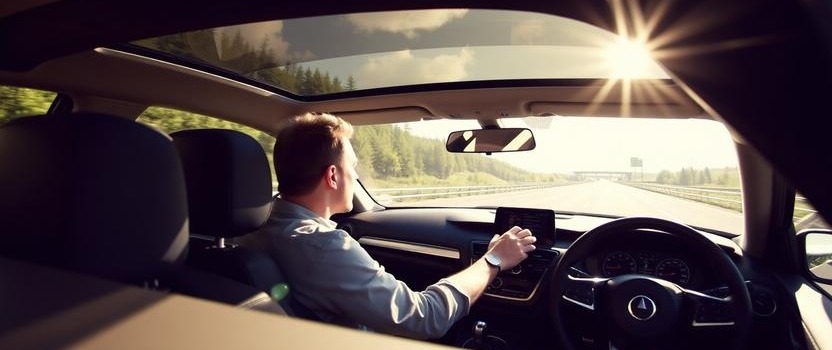
Right hand car in Spain


Secondly, there are legal and administrative hurdles. After moving to Spain, you must register your vehicle locally (and have it tested) within a specified period. This process can be complicated and costly for right-hand-drive cars. Apart from import duties, they might require additional inspections or restrictions. Insurance premiums for these vehicles are often higher due to perceived increased risk.

Lastly, consider the practicality. Spain’s car market makes it easier and often more economical to purchase a local, left-hand-drive car with, of course, Spanish number plates.

In conclusion, while it might feel comfortable to bring your trusted UK-registered right-hand drive car with you, the safety concerns, legal complexities, increased costs, and practical difficulties make it less advisable. Embracing a local, left-hand-drive vehicle will help you adapt to your new life in Spain more quickly, with peace of mind.
If your business or website can benefit from sponsoring this page with a link back, please contact us.

Feel free to share the article using any of the share buttons below.

Roundabouts are a motorists nightmare

In Spain, two-lane roundabouts are where so many foreigners have accidents or receive fines, all down to the different rules there.

The GOLDEN rule is you are NOT allowed to exit a roundabout from the inner lane at any time; you are ONLY allowed to exit from the outer lane.

The car in the outer lane always has priority, even if it does not intend to exit. That means to come off the roundabout, you must position yourself into the outer lane BEFORE your exit.

If you hit a car in the outer lane while exiting from the inner lane, you are automatically at fault. 

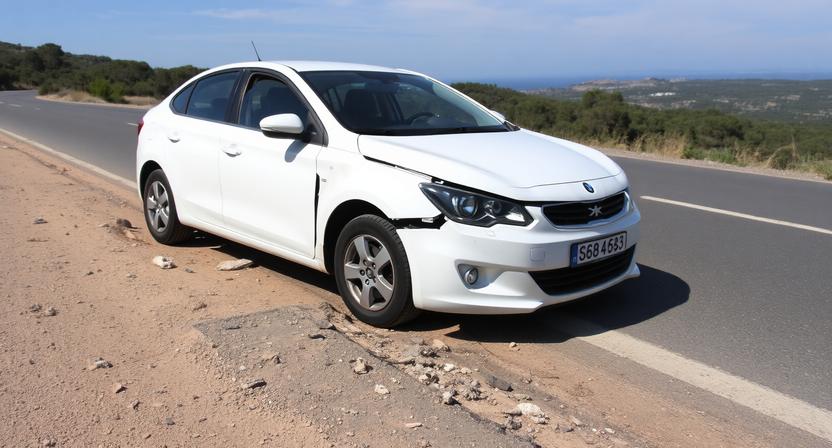
Car with slight damage following an accident


The
General Directorate of Traffic (DGT) states that roundabouts must be treated like straight roads, meaning you must always follow specific lane and priority rules to avoid accidents. Failure to do so also risks a fine.

Set Rules for Roundabouts

  • Direction: You must always drive anticlockwise.
  • Right-of-Way: Vehicles already in the roundabout have priority over those entering. When entering, you must give way to any vehicle approaching from your left.
  • Exit Lane: You must only exit from the outside (right) lane. Taking an exit directly from an inside lane is a serious offence that can result in a €500 fine and the loss of 6 points from your license.
  • If You Miss Your Exit: If the outside lane is occupied and you cannot safely merge to exit, you must continue circling the roundabout until you can move to the outside lane safely. Never stop inside a roundabout to wait for a gap.

Signalling and Special Cases

  • Indicators:
    • You do not need to signal when entering the roundabout.
    • You must use your right indicator just before your intended exit to warn other drivers.
    • Signal when changing lanes within the roundabout. Failure to signal correctly can lead to a €200 fine.
  • Cyclists: A group of cyclists is treated as a single vehicle. If the first cyclist has entered the roundabout, you must wait for the entire group to pass before you can proceed.
  • Large Vehicles: Bigger vehicles such as articulated lorries and coaches may use more than one lane if necessary to complete their manoeuvre.

If your business or website can benefit from sponsoring this page with a link back, please contact us.

Feel free to share the article using any of the share buttons below.

Driving licence points system in Spain

This article is to guide you through the points system for motoring offences in Spain. Primarily designed to promote road safety and responsible driving.

In Spain, the points system is officially known as the “Permiso por Puntos” or “Driving License Points System.” It was introduced to encourage safer driving habits by linking driving privileges to the accumulation or loss of points based on drivers’ behaviour on the road.

Unlike in the UK, each driver begins with 12 points on their license, which are reduced with fines if an offence is proven. 0 points means the licence will be suspended.

For new drivers, specifically those who have held their license for less than 3 years, the starting balance is 8 points, not 12. Points are deducted for traffic violations or motoring offences. The number of points deducted depends on the severity of the offence.


A car going past a red traffic light

For example, minor infractions might result in a 2-point penalty, while more serious violations can lead to a 6-point penalty or more.

If a driver loses all their points, the DGT (Directorate-General for Traffic) automatically suspends their license, and they must undergo a mandatory fixed period without driving.

Following this suspension, the driver must attend a driving awareness and rehabilitation course before they can regain their license and start driving again with a reduced number of points.

It is important to note that points can also be regained over time. Drivers who maintain a clean record for two consecutive years after committing minor offences can recover up to 2 points.

Those who have not committed any infractions for three years can have their full points balance restored.

This system serves not only as a deterrent to reckless driving but also as an educational tool, encouraging drivers to obey traffic laws for their safety and that of others.

In conclusion, the points system in Spain is seen by the DGT as a vital component of road safety enforcement.

It holds drivers accountable while providing the opportunity to regain trust and continue driving responsibly. Understanding and respecting this system is essential for all motorists in Spain.

If your business or website can benefit from sponsoring this page with a link back, please contact us.

Buying a second hand car in Spain

This article is to guide you through the essential steps involved in buying and registering a car in Spain. Whether you are a resident or planning to stay for an extended period, understanding this process is crucial to a smooth, legal vehicle acquisition.

First, let’s look at buying the car. You can purchase a car either from a dealership or a private seller. When buying from a dealership, the process is usually straightforward, as they often handle much of the paperwork on your behalf. However, if you buy from a private seller, it is important to thoroughly verify the car’s documentation.

Check the vehicle registration certificate and the ITV inspection report (the Spanish equivalent of the MOT), and ensure there are no outstanding debts or fines associated with the vehicle.

Once you have agreed on the price and completed the sale, the next step is to formalise the transaction with a signed contract or bill of sale, which is a legal requirement. These are available in most tobacco shops, believe it or not 🙂

Now, moving on to registering the car. If the vehicle is second-hand, you must transfer the registration to your name. This process is handled at the local Traffic Department office, known as the Dirección General de Tráfico or DGT.

You will need to submit several documents, including your identification (such as a passport or NIE), proof of address, the signed sale contract, the vehicle’s existing registration papers, and the ITV certificate.

Additionally, you must pay the applicable transfer tax, which varies depending on the vehicle’s age and engine size. After the paperwork and payment are complete, the DGT will issue you a new registration document in your name.

If you want, you can use a Gestor to do the process for you. They can check everything before you pay for the car and deal with the DGT on your behalf.

If you are buying a new car, the dealer usually takes care of the registration and tax payments.

Finally, don’t forget to arrange car insurance, which is mandatory in Spain before you can legally drive your vehicle on public roads.

In summary, buying and registering a car in Spain requires careful attention to legal documentation, tax obligations, and official registration procedures. By following these steps, you can ensure that your vehicle acquisition is both legal and hassle-free.

If your business or website can benefit from sponsoring this page with a link back, please contact us.

Car parking options at Spanish airports

Whether you are a frequent traveller or planning your first trip through one of Spain’s many airports, understanding the car parking options available can make your journey smoother and less stressful. Spain’s airports offer a variety of parking solutions designed to suit different needs, budgets, and lengths of stay. This article will guide you through the main types of car parking available at airports across Spain.

Firstly, the most commonly used option is the short-stay parking. This type of parking is ideal for those dropping off or picking up passengers, or for travellers who need to park for just a few hours. Short-stay parking areas are usually very close to the terminals, offering easy, quick access. However, because of their convenience, they tend to be more expensive per hour compared to other options.

For longer trips, the long-stay parking areas are usually more cost-effective. These parking lots tend to be a bit further from the terminal, but they are connected by frequent shuttle buses or, in some cases, a dedicated shuttle service. Long-stay parking is ideal for travellers who need to leave their cars for several days or even weeks, offering a balance between price and accessibility.

Another popular option in recent years is off-site parking. Many private operators near airports offer secure parking facilities at competitive rates. These services often include shuttle transfers to and from the airport, as well as additional perks such as car washing or maintenance. Off-site parking can be a great choice for budget-conscious travellers who are willing to take a short shuttle ride to the terminal.

Some airports also offer premium or valet parking services. For those seeking maximum convenience and time-saving options, valet parking allows you to drop your car off right at the terminal entrance. Your vehicle is then taken away and parked in a secure area, and it will be ready and waiting when you return. This service is more expensive but highly valued for its comfort and efficiency.

Additionally, at many Spanish airports, you can find parking for electric vehicles with charging stations. This is an important consideration for environmentally conscious travellers or those driving electric cars, ensuring that your vehicle can be charged while you are away.

When choosing your parking option, consider factors such as the length of your trip, your budget, the parking lot’s location relative to the terminal, and any special services you might need. Booking your parking in advance, especially during peak travel seasons, can also save you money and guarantee availability.

In summary, Spain’s airports offer a range of parking options, from short- and long-stay facilities to off-site, valet, and electric vehicle parking. Understanding these choices will help you select the best option to suit your travel needs, making your airport experience as hassle-free as possible.

If your business or website can benefit from sponsoring this page with a link back, please contact us.

Why car insurance includes breakdown cover

This article sheds light on an interesting difference in vehicle insurance practices between Spain and the UK—specifically, why roadside recovery services are generally included in the standard vehicle insurance package in Spain. In contrast, in the UK, they are often offered as an optional add-on.

In Spain, vehicle insurance policies often include roadside assistance by default. This approach reflects both evolving regulatory frameworks and consumer expectations. Spanish insurers recognise roadside recovery as an essential part of comprehensive vehicle protection, ensuring drivers have peace of mind in the event of a breakdown or accident without needing to purchase additional coverage.

One reason for this integration is the emphasis on consumer protection and convenience in the Spanish insurance market. Including roadside assistance as standard simplifies the insurance offering, making it easier for customers to understand exactly what they are covered for and eliminating the risk of underinsurance in emergencies. It also reflects a competitive market in which insurers differentiate themselves by offering added value and comprehensive packages.

Additionally, Spain’s geography and driving conditions play a role. In many rural and mountainous areas, where immediate help can be difficult to access, roadside recovery is especially important for driver safety and mobility. This practical necessity has encouraged insurers and regulators to embrace roadside assistance as a core part of motor insurance.

In contrast, in the UK, roadside recovery is often marketed as a separate product. This separation allows consumers more flexibility to tailor their insurance policies according to their individual needs and budgets. Many drivers may already have roadside cover through automobile clubs like the AA or RAC, or prefer to purchase it independently. The UK market reflects a different consumer mindset that values customisation and choice over bundled services.

In summary, roadside recovery is included with vehicle insurance in Spain because of regulatory practices, consumer protection priorities, and geographic considerations that make it essential. Meanwhile, in the UK, it remains a separate, optional product, offering drivers flexibility but requiring them to choose it actively.

Understanding these differences helps us appreciate how insurance markets adapt to local conditions, consumer behaviour, and regulatory environments.

If your business or website can benefit from sponsoring this page with a link back, please contact us.

Living in Spain with a UK licence?

To exchange your UK driving licence for a Spanish one after becoming a resident in Spain, here are the key steps:

  1. Residency Requirement
  2. You must first be officially registered as a resident in Spain (empadronamiento).
  3. Documentation Needed
    • Valid UK driving licence
    • Proof of identity (passport or national ID)
    • Proof of Spanish residency (empadronamiento certificate)
    • Recent passport-sized photographs
    • Completed application form (available from the Dirección General de Tráfico, DGT)
    • Medical fitness certificate (issued by an authorised medical centre in Spain)
    • Proof of payment of the applicable fee (around €24)
  4. Application Process
    • Visit your local DGT office (or apply online if available)
    • Submit all required documents
    • Undergo a medical examination to confirm fitness to drive
  5. Waiting Period and Validity
    • The exchange process usually takes a few weeks.
    • Your new Spanish licence will have the same categories as your UK licence.
  6. Important Notes
    • The exchange must be completed before your UK licence expires or within six months of becoming a resident.
    • UK licences are exchanged without a driving test because Spain has a bilateral agreement with the UK.

For the most up-to-date information and to download forms, visit the official Spanish traffic authority website: DGT – Dirección General de Tráfico.

If your business or website can benefit from sponsoring this page with a link back, please contact us.

Copywrite Findinspain